
Safe sleep for babies: the 10 rules
Most of it comes down to two things: how the baby is laid down, and what is in the sleep space.
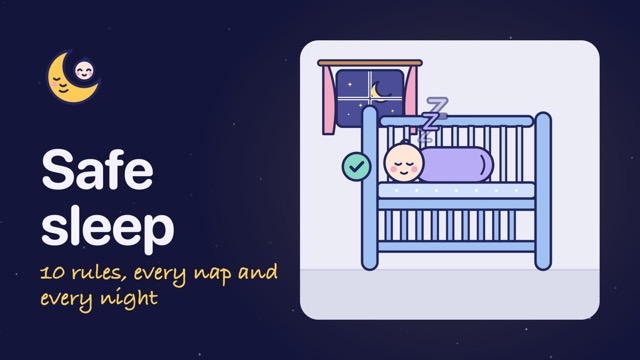 Watch on YouTube · 2:47
The 10 safe sleep rules
- Back to sleep, every sleepOn their back for naps and nights until the first birthday. Once they can roll both ways on their own, you do not need to turn them back.
- Firm, flat, non-inclined surfaceA safety-approved crib, bassinet or play yard with only a fitted sheet. Nothing inclined more than 10 degrees.
- Nothing soft in the sleep spaceNo pillows, blankets, bumpers, stuffed toys or loose bedding. A wearable blanket keeps a baby warm without covering the face.
- Same room, not the same bedRoom-sharing, ideally for the first 6 months, lowers the risk. Bed-sharing raises it, most of all under 4 months, with a preterm baby, or if anyone in the bed smokes, drank, or took sedating medicine.
- No inclined sleepers, weighted products or positionersWeighted swaddles and sleep sacks, inclined sleepers, and sleep positioners are not safe for sleep.
- Stop swaddling at the first sign of rollingA swaddled baby who rolls onto their front cannot push up. Move to a sleep sack with free arms.
- Offer a pacifier at sleep timeOnce breastfeeding is going well. If it falls out after they are asleep, leave it.
- Keep the air smoke- and vapor-freeDuring pregnancy and after birth. This includes cars and clothes.
- Avoid overheatingDress the baby in no more than one layer more than you would wear. No hats indoors for sleep.
- Car seats, swings and carriers are not for sleepIf the baby falls asleep in one, move them to a flat surface as soon as you practically can.
Sources
Written for the United States from these pages.
- AAP policy statement — Sleep-Related Infant Deaths: Updated 2022 Recommendationschecked Sep 8, 2026
- AAP HealthyChildren.org — How to Keep Your Sleeping Baby Safechecked Sep 8, 2026
- NIH Safe to Sleepchecked Sep 8, 2026
General information, not medical advice. Your own doctor or midwife knows your baby.